




AI is a hot topic across industries and is leaving people and companies struggling to understand how and where it fits in today’s landscape. As with any major market shift, some early adopters believe it is the answer to everything, some deny the impact and resist change, and some are cautiously optimistic or pessimistic.
I want to share some insights into where things stand today to help guide you on when and how it might benefit your real estate journey, and where you may want to be more cautious. I’ll also address where and how your realtor fits into today’s new world. I emphasize “today” because the pace of change right now is exponentially faster than we have ever seen before.
Let’s talk about real estate platforms. In the past, market data was available only to realtors through their real estate boards. Today, there are competitive real estate platforms available that provide market data, including sold data, directly to the end user or consumer.
Searching For Real Estate Listings
Red Flag
Most consumers don’t realize these platforms are real estate brokerages. These brokerages require you to register with an email address. Their job is to get your email to market to you. Also, as with anything, if poor data comes in, poor data comes out. These systems can miss listings.
It is not unusual for me to send a property to a client that they couldn’t find on one of the public platforms they use. It is usually a problem with the feed from the Toronto Regional Real Estate Board, such as an agent representing the listing missing a field in their entry, which prevents it from being pushed to cooperating sites. For these reasons, if I were a consumer searching for a property, I would not rely on one of these platforms.
Additionally, in a hot market, depending on when the new listing enters the MLS, it may not be available to the public until the next day, while your realtor can see it in real time. We can set up listings to be received by our clients in real time.
It can make a difference between snapping up what you want and waiting in line with everyone else. Additionally, these platforms have much fewer filter criteria than realtors have access to in their MLS systems, so if you have specific criteria needs, your realtor will have greater access to this data. As an example, if you are only looking for the power of sales or foreclosures, we can filter for that.
Green Flag
ChatGPT or Google AI for unique feature searches. My wife is a lover of all things mid-century. She would love a nostalgic mid-century side-split or back-split to update to today’s standards; she is a fan of sunken living rooms, walnut finishes, and modern design.
A quick ChatGPT search for Mid-century modern homes for sale in specific neighbourhoods will return a list of links to listings based on the keyword. As I’ve said before, with broker platforms, quality data in predicts quality data out.
If your realtor doesn’t have a good understanding of Search Engine Optimization technology and the unique features and draws of your property, and hasn’t included the right keywords in the description for the algorithms to find, your property won’t appear in this kind of search.
Searching for more real estate advice? Explore these related blog posts.
- How to Sell and Buy a House at the Same Time
- When Should Seniors Sell Their Home?
- What’s The Average Age To Buy A House In Canada?
Pricing Your Property
Green Flag
Many of these platforms have built-in algorithms that predict price points. This is excellent information, for generic directional information only. I would caution you against using this information today to price your home. This is a “don’t” and here is why:
Red Flag
There are many nuances to pricing a home; real estate is a world of micro markets. Pricing can literally change block by block for a variety of reasons. Have you ever been on one of these platforms and seen the “comparable properties” algorithm? They are often in a different neighbourhood or even a different style of home. If the algorithm thinks a bungalow is comparable to a two-story house, it isn’t even close.
If you want accurate pricing for your home, you need a realtor who understands the factors that influence pricing, is a diligent researcher, and actively trades in real estate. Let me use the Beaches neighbourhood as an example of pricing factors that the algorithms are not yet capturing.
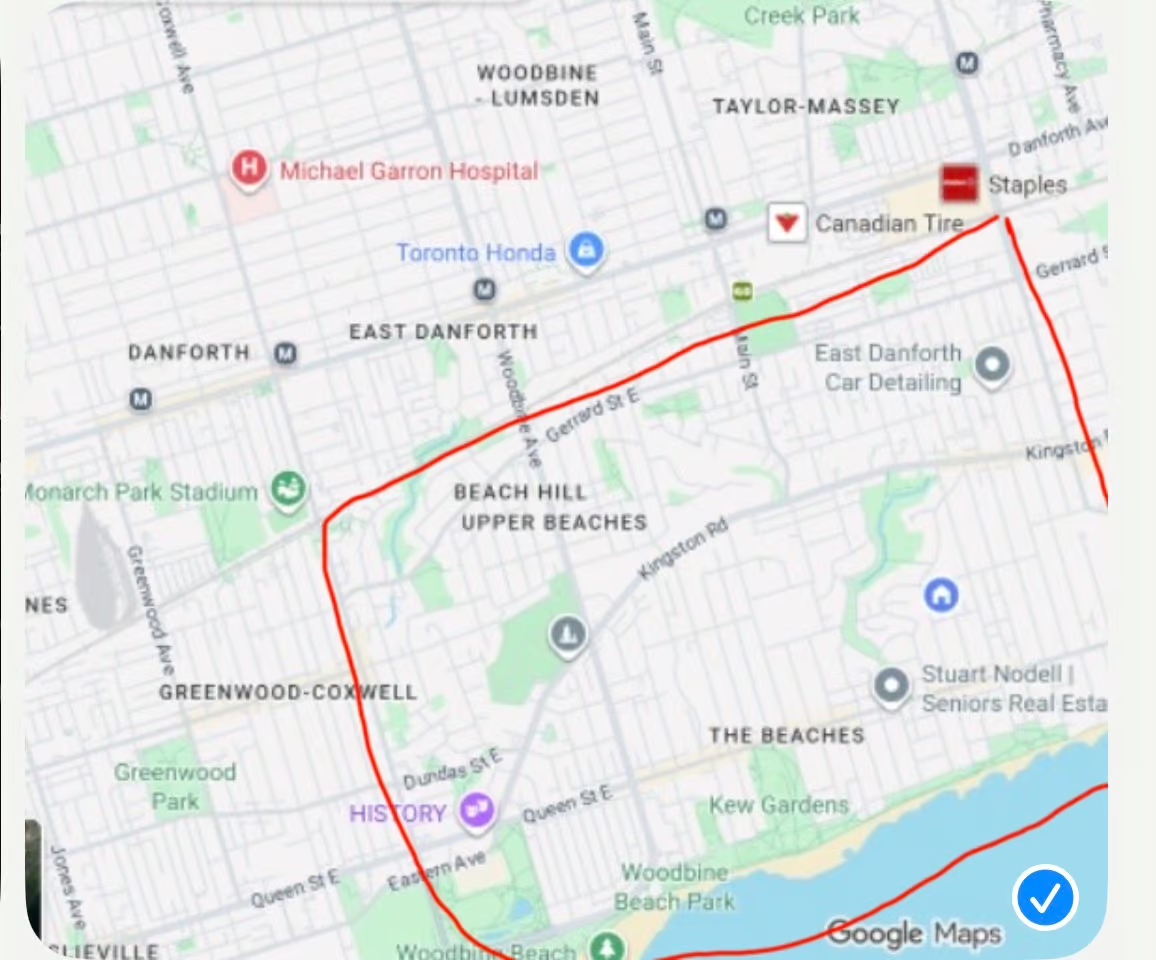
Looking at the Beaches neighbourhood, here are components that affect property values:
East Vs. West
As a general rule, properties on the eastern side (up to Victoria Park Ave) of The Beach are going to be valued higher than those on the West side (Coxwell Avenue).
The West side is busier and closer to the touristy areas of the Beach. This may be a draw for singles and couples, but it is less appealing to families, a large demographic in this neighbourhood. Once you head East past Woodbine Avenue, prices start to increase. The Western side of the Beach is often the entry point into this neighbourhood, and people will move East as they become move-up buyers. The East is less congested and quieter. East of Victoria Park is Scarborough, where there are many beautiful properties; however, they are not as valuable as prime beach properties.
North Vs. South
As a general rule, the closer to the lake, the more valuable the property. South of Queen is more expensive than north of Queen. South of Kingston Road is more expensive than north of Kingston Road.
Parking
Parking is a premium in the Beaches; this can impact street-by-street value or even block value. For example, fewer properties on the West side of the beaches have dedicated parking, making street parking difficult to find. This makes the streets less valuable.
Spruce Hill Road on the East side has a block with laneway parking behind the homes on both sides of the street, where most homes have two-car parking side by side (a desirable and unique feature). This means this block is worth more than many surrounding streets because street parking for residents and visitors is easier. Other factors that make it a premium street include its one-way (southbound) status and its lack of direct access from either Queen St. or Kingston Rd., which reduces through-traffic compared with the surrounding streets.
Schools
In family neighbourhoods such as the Beaches, schools are a major factor in pricing and desirability. For example, Balmy Beach is a desirable elementary school, so being in that catchment area can mean a premium. Malvern is a desirable high school, so being in that catchment can carry a premium.
Staging
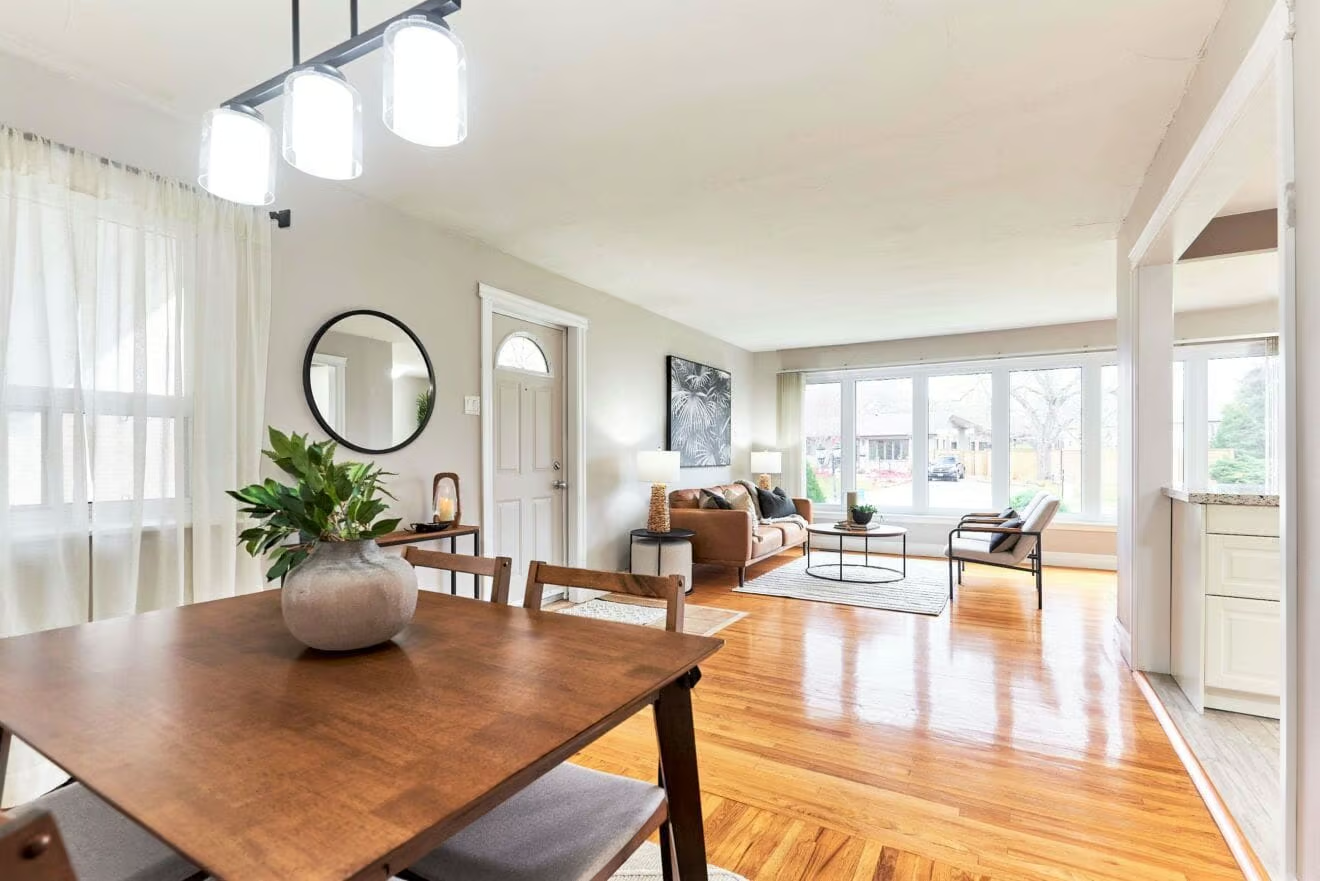
Staging has a significant impact on property value, often 10% and I’ve experienced even more (which is why I offer staging). Algorithms can’t distinguish between staged and non-staged properties for valuation.
Other Random Detractors That Can Impact Value That the Algorithm Doesn’t Know
Is there a gas station next door? Is there a high school across the street? Is there an apartment building overlooking your backyard? Does your street have many rental properties? Is the property across the street community housing? Is your street known for termite activity? Or is your street known to experience lots of flooding? All of these are factors in pricing that the algorithm won’t know, but your realtor should.
The right approach isn’t choosing AI or a person-it’s knowing how they work together. If you are considering your next chapter, contact me and let’s have a conversation.
Ready to buy or sell? I can help! Reach out to 647.283.2127 or email stuart@stuartnodell.com to start a conversation.
Book a Consultation
See how I simplify your real estate experience with personalized plans and total project management.