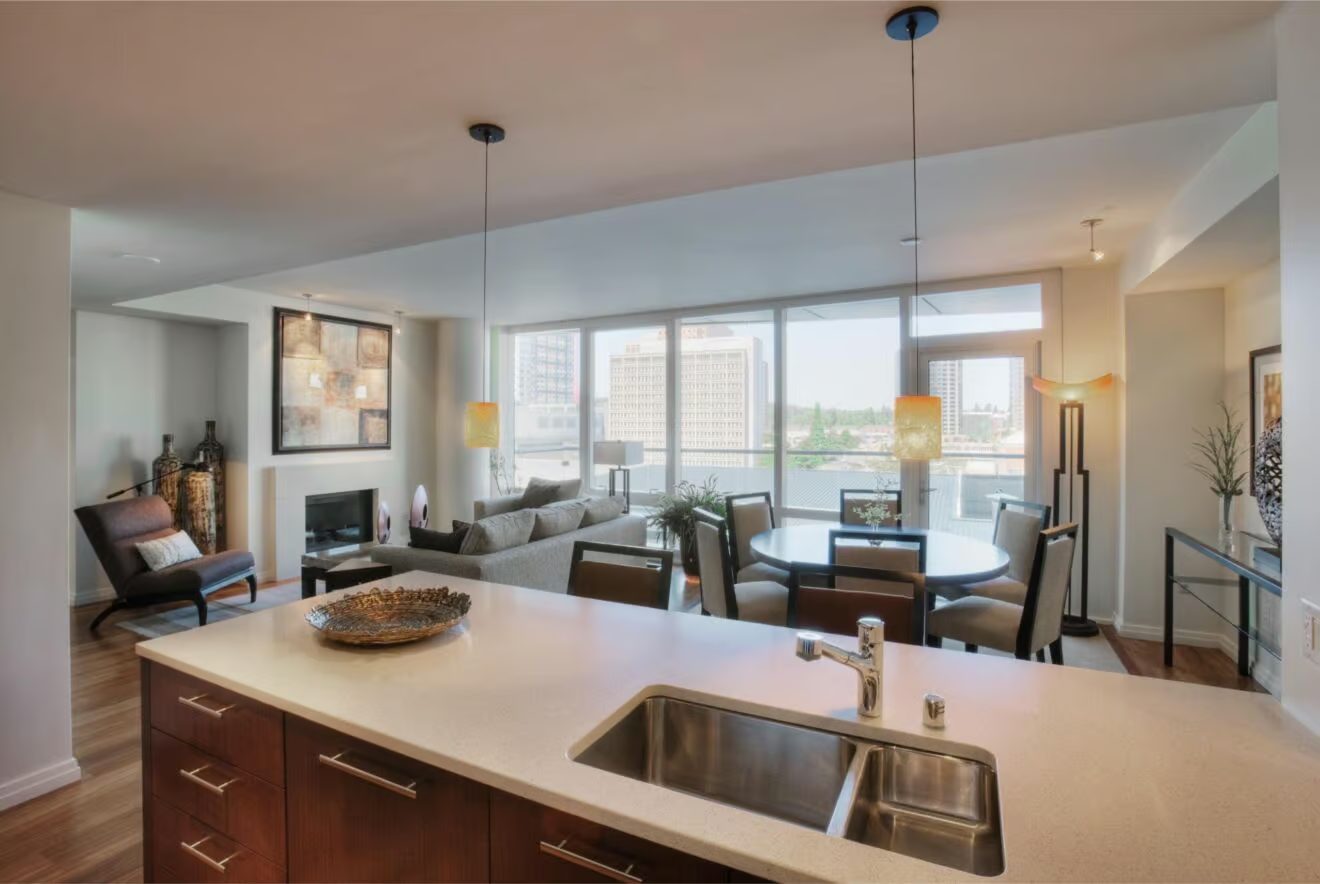




Downsizing isn’t about giving things up. It’s about trading a home that made sense twenty years ago for one that makes sense today.
Jump to Section
- The 2 Sides of Downsizing
- Is it Time to Downsize?
- What Are My Options?
- What Are the Financial Implications?
- How Downsizing Works, Step by Step
- What Should I Do With All My Stuff?
- Case Studies: How Are Toronto Homeowners Downsizing?
- Thinking About Downsizing
The 2 Sides of Downsizing
There are two different ways that people look at downsizing. Your personal goals may align with one or both of these common scenarios.
Lifestyle Downsizing
Reducing maintenance, unused rooms and stuff. Increasing comfort, time and mobility. Creating opportunities for easier travel, more walkability, one-floor living. Sometimes moving to a smaller, close knit community.
Financial Downsizing
Releasing home equity, reducing carrying costs, moving outside Toronto, and/or redirecting money toward retirement, travel or family. It is important to note that you can downsize your responsibilities without downsizing your square footage.
Is it Time to Downsize?
Finding the right time to downsize isn’t always easy. Sometimes a little outside perspective can be helpful. Having worked with downsizers for decades, here are some of the common signals that they used to determine they were ready to downsize:
- They had rooms whose purpose seems to be to hold stuff
- They were getting tired of doing or paying for home maintenance/ they wanted to travel without worrying about their house
- Stairs were a bigger chore than in the past
- Most of their money was tied up in their house
- They wanted to live closer to amenities or family
- They just didn’t use the house the way they used to
- They had a reality check. They needed to become someone else’s support during an emergency downsize and want to avoid that pain
Leaving a home you may have lived in for decades can be an emotional decision. After helping hundreds of families downsize, I have yet to meet someone who regretted it, including those who struggled most with the decision; in fact, the most common thing I hear afterward is, “We wish we’d downsized sooner.”
Looking for more advice on buying or selling real estate as a senior? Explore these related blog posts.
- Condo vs. House – What’s Better For Seniors?
- Who Gets the House When a Spouse Dies?
- Can I Use My Pension to Buy a House?
What Are My Options?
Here, we focus on the type of home you want. We’ll explore some factors for your desired move. While some people move for financial reasons, I haven’t met anyone for whom lifestyle isn’t equally important. So we’ll spend most of our time exploring the lifestyle factors that matter most to you. Is one-floor living a must? Accessibility? Moving closer to family or to a smaller town/community?
I will help curate the best options for you based on your unique criteria. I may even suggest options you haven’t considered. Two of my recent buyers ended up buying properties that weren’t on their radar, but turned out to be exactly what they were looking for. Touring several types of properties before you decide is a great way to learn what you really want in terms of lifestyle.
What Are the Financial Implications?
For financial downsizers, understanding the costs of moving and what you’ll free up is critical. Moving costs may include real estate fees, legal fees, deferred maintenance, moving costs, land-transfer taxes, condo fees and property taxes, and potentially interim accommodations.
I recently broke these costs down for a retiree living in a multi-generational situation with her adult child who wanted to move out on his own with his wife. When we broke down the move costs for both parties, I advised them that it made more financial sense for him and his wife to stay in their home and buy out their mother’s portion. She then used the proceeds to find a condo for herself in a great area.
Sometimes the numbers confirm that the move makes sense. Sometimes they point you to a solution you hadn’t considered. The key is to understand the numbers before you decide.
How Downsizing Works, Step by Step
Downsizing usually involves two transactions at once: selling a home you’ve lived in for years and buying something that fits your next chapter. In my experience, the process works best when you plan both sides together from the beginning, not one at a time.
Step 1: Understand what you actually want
Before we look at listings or talk about market conditions, we talk about your life. What does a good week look like? What do you want to be closer to? What are you willing to give up, and what matters more than you thought? Getting clear on this first changes everything that follows.
Step 2: Get a realistic look at your current home
I review current market conditions and give you an honest opinion on your home’s current market value and what you need to do to prepare it for sale and maximize its value. No optimistic guesses designed to win your business. Just the actual numbers, based on real data.
Step 3: Explore your options
We look at what’s available in the communities that fit your lifestyle: condos, bungalows, townhouses, active adult communities, and retirement properties. I’ll share insight into what each property offers you. Not just the information you will find scrolling on the internet.
Step 4: Coordinate the timing
One of the most stressful parts of downsizing is getting the sale and the purchase to line up properly. We will work together to help create a realistic timeline that protects you on both ends and gives you breathing room through the transition. You shouldn’t be scrambling.
Step 5: Manage the move
I connect you with the right people: estate sale specialists, senior move managers, donation services, contractors, lawyers, and movers who work with clients making this kind of transition every day. You don’t have to figure out who to call. I already know.
Step 6: Stay in touch after
The relationship doesn’t end on closing day. I stay available in the weeks and months after the move because questions come up, things feel unsettled, and sometimes you just need someone familiar to talk it through with. That’s what high-touch service is.
Tip: Many downsizers want to have a firm sale in place before committing to the next property to reduce financial uncertainty. But the right order depends on your finances, the market you’re selling in, and how difficult your next home will be to find. We develop a strategy tailored to your circumstances before you make either move.
Searching for blogs related to downsizing? Explore these related blogs next!
- What Seniors Need to Know About Downsizing for Retirement
- Can Downsizing Actually Save Me Money?
- 5 Decluttering Tips For Seniors
What Should I Do With All My Stuff?
This is often a big barrier for downsizers. You don’t need to have everything sorted before we start talking. In fact, it’s often easier to plan the house first and then work backward from the timeline. I’m here to help!
I work with a network of estate sale companies, senior move managers, and donation services who are equipped and experienced in helping downsizers. You don’t have to figure it out alone, and you don’t have to do it all at once. We built it into the plan from the beginning.
Case Studies: How Are Toronto Homeowners Downsizing?
Downsizing by Choice, Not Circumstance
A year ago, I helped a retired couple in Scarborough who’d spent a decade caring for their aging parents. Both are healthy and active, but they’d seen what happens when you wait too long to downsize: moving because of circumstance, under pressure, and not by choice- rushed decisions during a crisis. They didn’t want that for themselves, and they don’t want to burden their adult children later.
These clients chose to move from their two-storey home to a condo. In this case, they chose a lifestyle downsize rather than a square-foot downsize. They no longer have to manage maintenance, and the lifestyle suits them because they value convenience, their time, and a walkable location close to their doctors, friends, and shopping. They built their lifestyle around the present and the future.
Planning lets them maintain control of their lifestyle rather than have decisions made for them. This is what peace of mind looks like.
Trading Toronto for more freedom
A couple I worked with were recently retired and wanted to downsize financially. They wanted out of Toronto and had spent years researching nearby small towns to consider moving to. Their criteria included a much larger lot (1 acre), more square footage, and a must-have: a bungalow, as one of them is in a wheelchair.
They hoped to achieve their dream home and free up around $200,000 for renovations and/or retirement savings. They had the financial room to carry 2 homes, so they decided to buy first, given that they were restricting their search to the town of Cobourg and had a narrow set of criteria.
Dreaming of a new chapter outside of Toronto? Explore the Best Small Towns in Ontario to Retire to.
While they were looking, they focused on upgrades to their current Scarborough home to maximize its value when it came time to sell. We sold the Scarborough bungalow in record time, for $228,000 over the asking price, in a declining market, and the homeowners were elated with the results.
They even told me they’re now “richer than we thought”. With their better-than-expected sale results and the negotiated price on their purchase, they exceeded their budget differential and freed up around $300,000 through the move. This allowed them to make the improvements they wanted to their dream home and still add to their retirement savings.
Helping a loved one sell their home? Explore these related blogs for more helpful advice.
- How Long Does Probate Take in Ontario?
- When Can You Sell a Parent’s Home After They’ve Passed Away?
- Preventing Family Conflict When Selling Your Parent’s Home
Thinking About Downsizing?
You don’t have to be ready to sell your home to start planning. Some of my clients first talk to me months or even years before they make a move.
We can start by talking about what you want your next chapter to look like, what your current home may be worth, and what options might make sense for you. There is no pressure to decide. Sometimes the first step is simply understanding what is possible.
Talk to Me About Your Downsizing Options
Ready to start your downsizing journey?
Give me a call at 647.283.2127 or email stuart@stuartnodell.com to get in touch.
Book a Consultation
See how I simplify your real estate experience with personalized plans and total project management.